
Leo; Meet Lazarus!
Only a "Wounded healer" can heal. (Or a resurrection man).

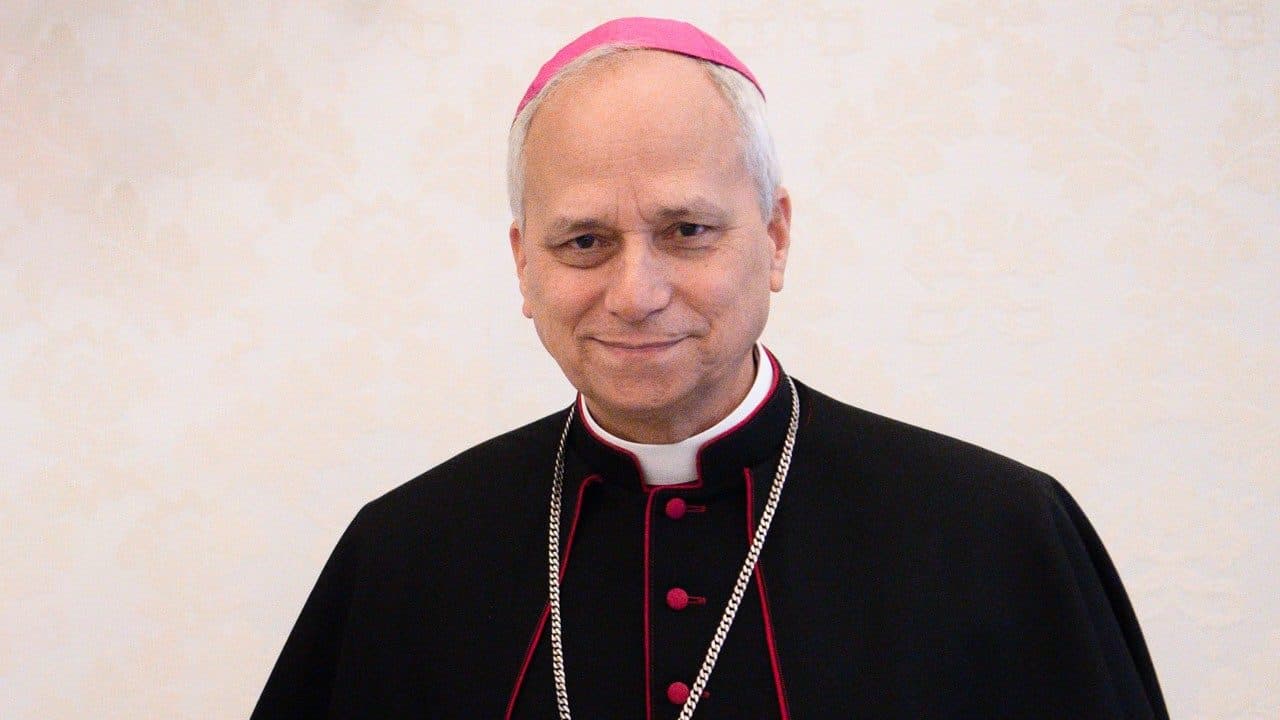
(Cardinal Robert Francis Prevost/ Pope Leo XIV May 8, 2025)
How wounded do you have to be, to be a “Wounded Healer?” We have recently heard the text (and no doubt many sermons over a lifetime), of Jesus’ invitation to forgiveness and a fresh start with Peter. For the three denials (John 13:38 etc) Jesus refocuses on three affirmations of trust and confidence: “I’m not one of his,” - “Tend my lambs;” “I am certainly not with him;” – “Shepherd my sheep;” “Did I not see you in the garden with him?” “You certainly did not!” – “Tend my sheep.” (John 21:1-17.) In Luke’s gospel we read further, “Peter, you must be sifted like wheat. And once you have recovered, then you, in your turn, can strengthen your companions.” Peter will, as Jesus confirmed in his nickname, establish the Church, on the Rock of the declaration, “You, Jesus, are the Son of the Living God, the Messiah!”
In his book Wounded Healer, Henri Nouwen writes much about his own journey and how, as a priest, he had to learn that regardless of all aspirations and desires to help and heal, unless we have, ourselves, been wounded “by God” we cannot help others. We really can’t lead anyone where we have not gone; suffering and love are the only true - and truly - transformative agencies. When we can only talk about compassion, for example, we achieve little. When we are compassion because we have experienced compassion, then there are no limits to the healing available. We transform people to the degree we have been transformed, as Richard Rohr says so often. We become “Wounded Healers”.
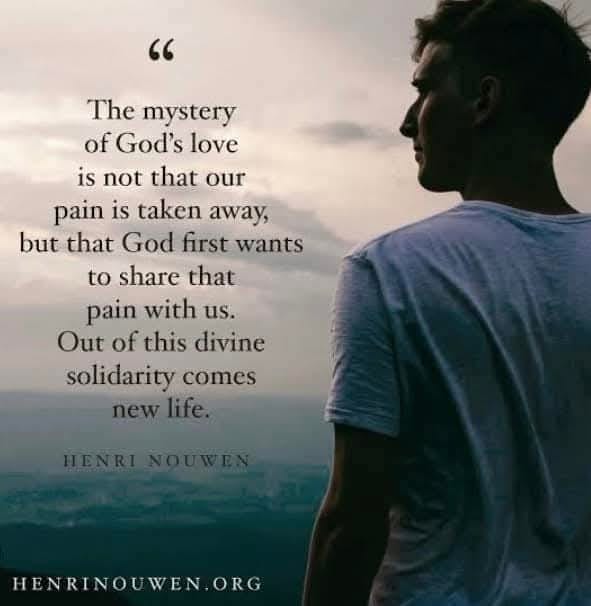
In a rather extraordinary way Jesus used Lazarus’ death to make the same point – in his case extremely well! In her sermon for our latest Choral Evensong, one of our Licensed Lay Ministers, Angela, spoke about how “we stinketh,” as corruption has set in on us just as surely as it had begun to on Lazarus: “At times” she wrote, “we feel all sorts of internal negative emotions of self-loathing, not being good enough, comparing ourselves to others, that bind us as if in a grave, stiff and lifeless. Jesus calls us out from our tomb to new life in all its fullness. He calls as out from our humanity to share in his divinity.” This self-rejection is certainly the case for us some, or perhaps, altogether too much of our time.
I think it is not an understatement to say, however, that there is yet more going on in this tableau than we at first notice. Lazarus, Mary and Martha were very special people in Jesus’ life. Bethany, where they had their home, was a haven of rest and respite for the homeless preacher/healer and as often as he could when he was nearby, Jesus stayed with them. (See God’s Favourite Place on Earth by Frank Viola.) Indeed, some theologians make the case that it was Lazarus, and not John as popularly assumed, who was “the disciple whom Jesus loved.” (See “Lazarus, not John, was the beloved disciple.” by Alan Rudnick. See also: 10 Reasons I Think Lazarus, Not John, Is the Disciple Whom Jesus Loved by Chris Hikes.)
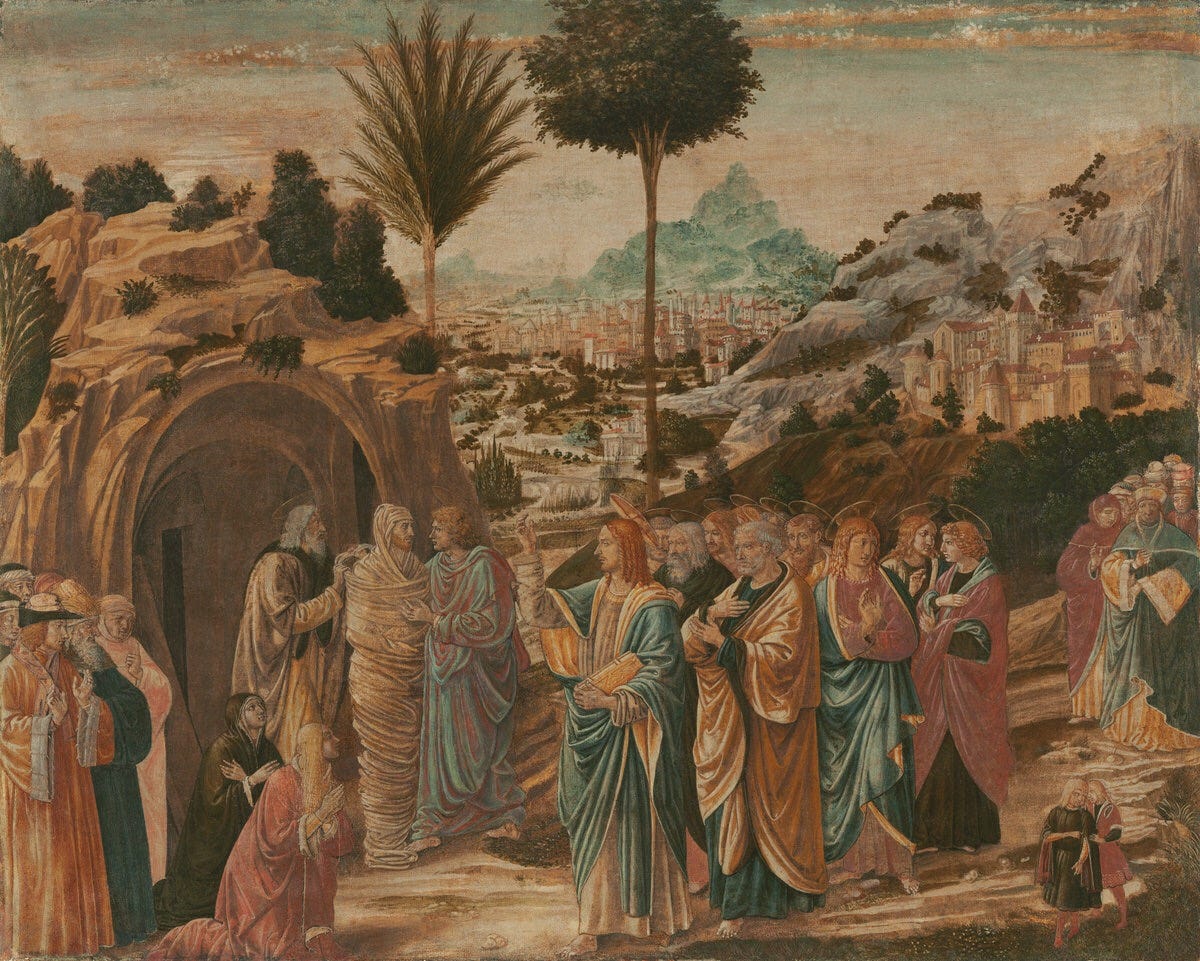
The events around the raising of Lazarus as recorded in John’s gospel bear reading again at this point. (John 11:1-46)
Let us just make some key notes from what is a profoundly complex narrative with a number of criss-crossing themes any one of which would give us a meaty article or blog. Some have even written books on them!
* “Jesus loved Martha, and her sister, and Lazarus. (v5)
* If anyone walks in the night, he stumbles, because the light is not in him. (v10)
* Lazarus is dead, and I am glad for your sakes that I was not there, so that you may believe…(v15)
* (Thomas): “Let us also go that we may die with him.” (v16)
* “I am the resurrection and the life; he who believes in me will live even if he dies, and everyone who lives and believes in me will never die. Do you believe this?”
God is love. Jesus of Nazareth is the Son of God humanly incarnated. God loved the world so much that he gave his only begotten Son. The life we live in our bodies, we live through the faith of the Son of God (Jesus the Christ) who loved us and gave himself up for us.
Are we getting the picture? Because this same Jesus is mentioned as loving in a particular and intimate way, Martha, Mary, and Lazarus. There was someone known as “the disciple whom Jesus loved.” John? Peter? Lazarus? Mary Magdalene?
Does it matter? (And of course, Jerusalem, Judea, Israel, Rome; Greeks, Night-club owners, Philosophers, Prostitutes, Romans, Tax-collectors, as well as lepers and soldiers, alcoholics and drug-dealers, enemies, gays and trans-persons, etc. etc.)
The list is infinite, as Jesus is all-love-affirming.
Lazarus’ problem was that, for the time being, he was waking in the night of death.
Literally.
We have all been doing this since Post-Original-Blessing. We stink! But, as Jesus points out, it’s just as well we were dead because now we can believe in the face of our resurrection life, our unbinding, our liberation. Thomas speaks prophetically: “Let us also go and die with Him!”
Of course! Otherwise, how can we come and live with Him?! Because it is Christ Jesus who is the resurrection! God does not simply love: God IS Love. Jesus was not simply raised from the dead (or merely resuscitated): Jesus IS the resurrection. “And when I am raised up,” he predicted, “I will draw [literally: “drag”] ALL to myself.”
Do you believe this? Do I? (For the record, yes, I do.) If he is crucified, dead and buried, so also are you crucified, dead and buried. And as he was raised, so too are you; are we!
Lazarus is the Ultimate Wounded Healer in the image and type of Christ Jesus. We ascribe lots of stuff to Jesus we fail to ascribe to ourselves (we “Lazaruses”). Yet “As He is in the world, so also are we.” (1 John 4:17)
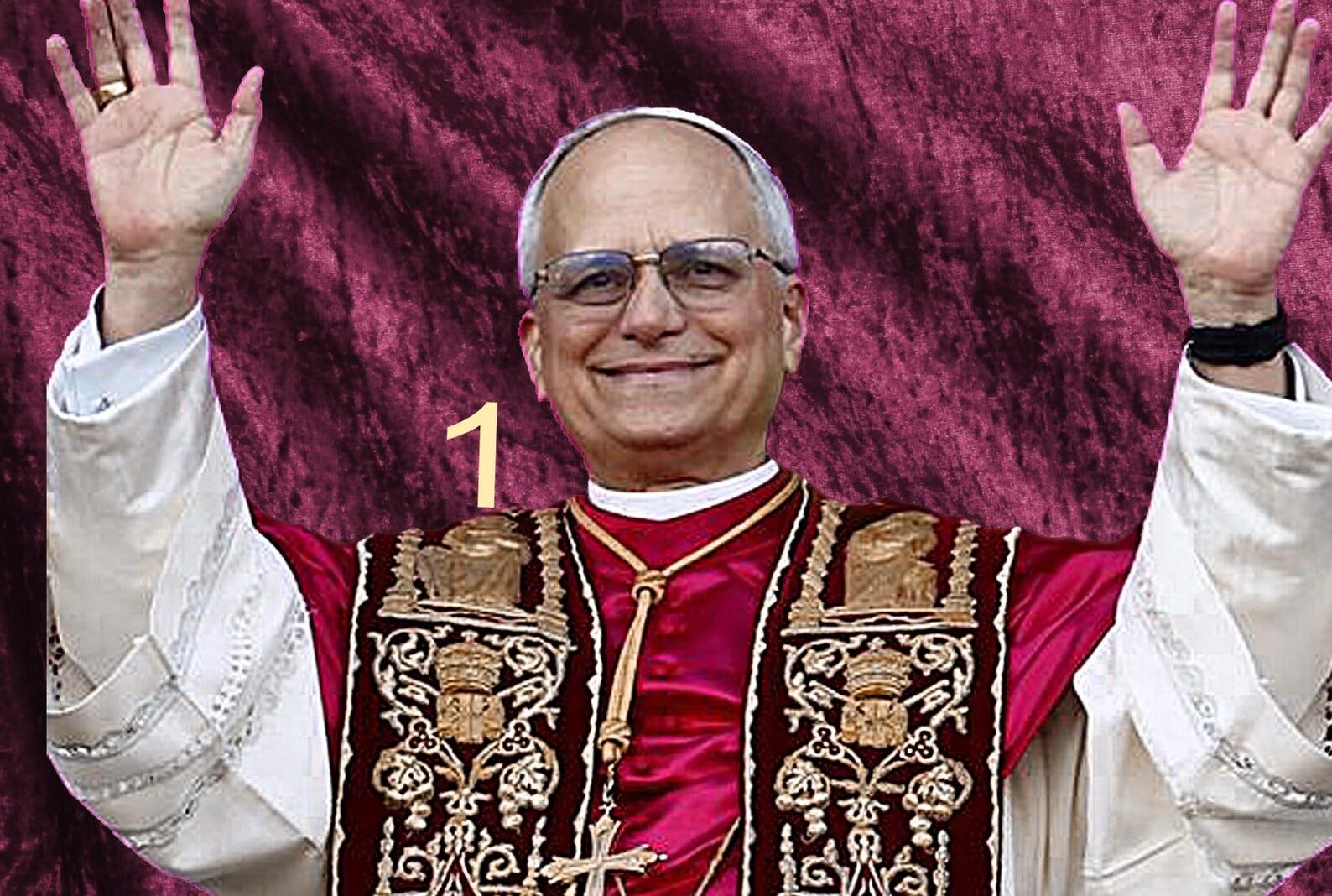
(Pope Leo XIV - 8 May 2025)
So, Pope Leo XIV: meet Lazarus - meet yourself.
Cardinal Robert Francis Prevost who has succeeded Pope Francis (Jorge Mario Bergoglio as was) has spoken much about healing: healing the Roman Catholic Church, the Church more generally, and the world of geopolitics, economics, climate change and all manner of additional evils.
If, as his biographies (and hagiographies, for sure), and whose public acclaim and jubilation are presentiments of “continuity and change,” then we must hope that as the pontifical pinnacle of homo religious, Leo XIV is also the epitome and exemplar of a Wounded Healer - for all our sakes.
Go well, Wayfarers.
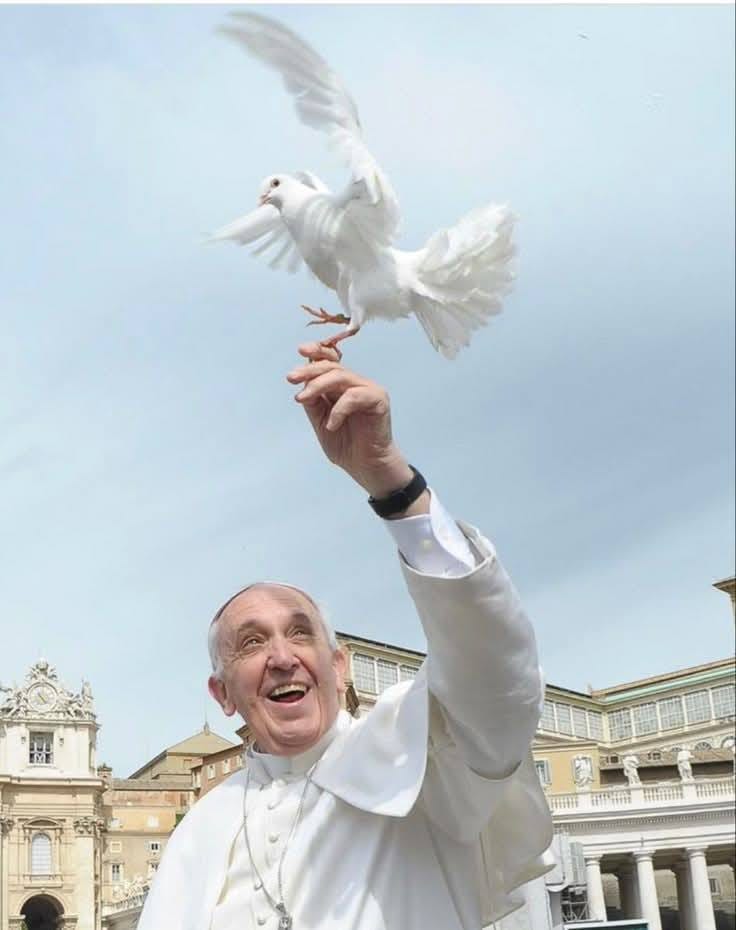
ON EVANGELISM
“We have to go out
and talk to people
In the city
Who we’ve seen
On their balconies.
We have to come
Out of our shell
And tell them that
Jesus lives…
…to say it with joy!...
Even though it
Seems a little crazy
Sometimes.”
Pope Francis – Homily, 11 March 2000